
Previous
Next
Homeopathy Treatment For Gall Bladder Stones Treatment
What Are Gallstones?
Gallstones are pieces of solid material that form in your gallbladder, a small organ under your liver. If you have gallstones, you might hear your doctor say you have cholelithiasis.Your gallbladder stores and releases bile, a fluid made in your liver, to help in digestion. Bile also carries cholesterol and wastes such as bilirubin (which your body makes when it breaks down red blood cells) out of the liver. These things can form gallstones when they’re out of balance.
Gallstones can range in size from a grain of sand to a golf ball. You can have one large stone or hundreds of little ones. Some people get a mix of big and small stones. You might not know that you have them until one or more block a bile duct, causing pain.
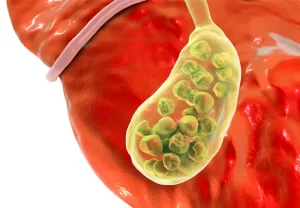
Gallstone Types
The two main kinds of gallstones are:
- Cholesterol stones. These are usually yellow-green because they’re mostly made of undissolved cholesterol. But they can have other stuff in them, such as bilirubin or bile salts. They’re the most common, making up about 80% of gallstones.
- Pigment stones. These are brown or black stones made mostly of bilirubin. People who get them usually have liver disease or a blood disorder such as sickle cell anemia or leukemia.
Gallstone Symptoms
You can have gallstones and not know it. Symptoms typically happen only when one or more gallstones get stuck and block the flow of bile from your gallbladder to your small intestine (where your food goes right after it leaves your stomach). This is called a gallbladder attack or biliary colic.
Some symptoms of gallstones include:
- Pain in the upper right side of your belly just under your ribs
- Pain in your lower chest, right shoulder, or back
- An upset stomach
- Nausea or vomiting
- Other digestive problems, including indigestion, heartburn, and gas
Gallstones may pass on their own. But in some cases, you might need immediate medical care. See your doctor or go to the hospital if: Your belly pain lasts more than 2 hours or is severe. You have a fever along with chills. Your skin or eyes look yellow. Not getting treatment quickly could lead to complications such as infection and inflammation. It’s important to talk to your doctor because a gallbladder attack can be similar to other health conditions that also need treatment, such as appendicitis, ulcers, pancreatitis, or more serious medical issues.
Our Cure Case Videos
Watch More
https://www.youtube.com/watch?v=Ab53Netxvhshttps://www.youtube.com/watch?v=C9pSSFXrjog&t=92shttps://www.youtube.com/watch?v=5QE62x7Z9PE&t=11shttps://www.youtube.com/watch?v=epAOQKcAtGc&t=78s